1. Introduction to Bioluminescence in Havelock Island
Havelock Island, officially known as Swaraj Dweep, is one of India’s most captivating tropical islands. Renowned for its turquoise waters, powdery white beaches, and vibrant marine life, the island attracts travelers from across the world. While daytime adventures like scuba diving and snorkeling are popular, Havelock hides a secret that reveals itself only after sunset — bioluminescence in Havelock Island.
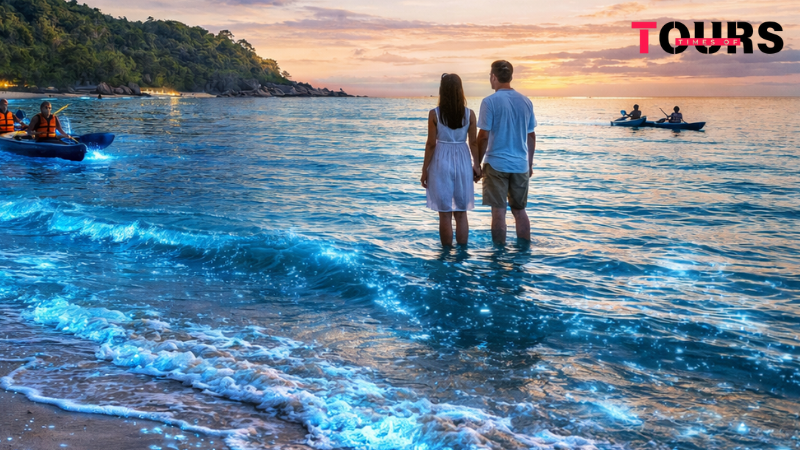
As darkness falls, certain beaches and mangrove-lined lagoons come alive with glowing blue sparkles in the water. With every paddle stroke, footstep, or wave movement, the sea lights up as if stars have descended into the ocean. This rare natural phenomenon creates an almost surreal atmosphere, offering travelers a once-in-a-lifetime experience that blends science, nature, and magic. For those seeking something beyond conventional beach holidays, bioluminescence in Havelock Island is a truly unforgettable highlight.
2. What Is Bioluminescence & Why It Occurs Here
Bioluminescence is a natural light-producing phenomenon caused by microscopic marine organisms known as phytoplankton, particularly dinoflagellates. These tiny organisms emit light when disturbed by movement such as waves, paddles, or swimming. The glow is believed to be a defense mechanism that helps deter predators in the ocean.
Havelock Island offers near-perfect conditions for bioluminescence to occur. Its surrounding waters are remarkably clean, with minimal industrial pollution and limited artificial lighting in certain areas. The island’s calm mangrove creeks and shallow lagoons allow phytoplankton to thrive undisturbed. Additionally, the low population density and protected marine ecosystem ensure that the natural balance remains intact. This is why bioluminescence in Havelock Island is considered one of the finest natural light shows in India and a rare phenomenon even on a global scale.
3. Best Time to See Bioluminescence in Havelock Island
Timing plays a crucial role in witnessing bioluminescence in Havelock Island. While the phenomenon is natural, its visibility depends heavily on seasonal and environmental factors.
🌙 Ideal Season
The best time to experience bioluminescence in Havelock Island is from November to April. During these months, the sea remains relatively calm, water clarity is high, and plankton activity is more stable.
Peak Visibility: December to February
These winter months offer the most consistent sightings, making them ideal for travelers planning their trip around this phenomenon.
🌑 Moon Phase Matters
Moonlight significantly affects visibility. Bright moonlit nights can overpower the faint glow of bioluminescence.
Choose new moon nights or days with minimal moonlight
Dark skies dramatically enhance the glowing effect in the water
🌊 Weather Conditions
Calm seas and clear skies improve your chances of seeing the glow clearly. Rough waters scatter plankton and reduce visibility. It’s best to avoid the monsoon season between June and September, when strong currents and unpredictable weather conditions make sightings rare.
4. Best Places to Experience Bioluminescence
Although bioluminescence is unpredictable, certain locations around Havelock Island consistently offer higher chances of sightings.
✨ Havelock Mangrove Creeks
Mangrove creeks are the most reliable places to witness bioluminescence in Havelock Island. The shallow, still waters are rich in phytoplankton, and the absence of artificial lighting enhances visibility.
Best accessed via guided night kayaking tours
Ideal for close-up viewing as paddles disturb the water gently
✨ Beach No. 7 (Selected Nights)
This beach has limited human activity and minimal light pollution. On certain nights, wave movements naturally trigger glowing blue flashes near the shore, creating a mesmerizing sight.
✨ Neil Channel (Occasional Sightings)
Located between Havelock and Neil Island, this area sometimes experiences bioluminescence depending on water conditions. However, it requires local guidance and precise timing.
Tip: Always rely on licensed local operators who understand tide patterns, moon phases, and safety protocols. This not only improves your chances of sightings but also ensures a secure experience.
5. How to Experience Bioluminescence (Kayaking & Night Activities)
The most immersive way to witness bioluminescence in Havelock Island is through night kayaking.
🚣 Night Kayaking Experience
Night kayaking tours are conducted in calm mangrove waters under expert supervision.
Transparent kayaks allow you to see glowing trails beneath you
Gentle paddling causes the water to shimmer with neon-blue light
Duration: approximately 1 to 1.5 hours
This experience feels almost otherworldly, as every movement leaves behind sparkling patterns in the dark water.
👣 Shoreline Viewing
In some cases, simply walking slowly in shallow waters can trigger bioluminescence. While less reliable than kayaking, it can still be magical when conditions are right. However, shoreline sightings depend heavily on tides and plankton concentration.
6. How to Reach Havelock Island
Many travelers planning this experience often ask how to reach Havelock Island. The journey is straightforward and scenic.
✈️ Step 1: Reach Port Blair
Your journey begins at Port Blair, the capital of the Andaman and Nicobar Islands. Direct flights are available from major Indian cities such as Delhi, Chennai, Kolkata, and Bengaluru.
⛴️ Step 2: Ferry to Havelock Island
From Port Blair, travelers must take a ferry to Havelock Island.
Government ferries: Budget-friendly but limited schedules
Private cruises: Makruzz, Green Ocean, and Nautika offer faster and more comfortable services
Travel time typically ranges between 1.5 to 2 hours. Advance booking is strongly recommended, especially during peak tourist seasons.
7. Snorkeling Havelock Island: Perfect Day Adventure
Before witnessing glowing waters at night, explore the vibrant marine world with snorkeling Havelock Island, one of the top daytime activities in Andaman.
🤿 Best Snorkeling Spots
Elephant Beach: Ideal for beginners with shallow coral reefs
Nemo Reef: Famous for colorful fish and coral gardens
Vijay Nagar Beach: Calm waters and excellent visibility
Snorkeling Havelock Island allows you to experience tropical fish, living corals, and crystal-clear waters under sunlight. This daytime adventure beautifully complements the nighttime magic of bioluminescence, making your trip both diverse and memorable.
8. Travel Tips & Responsible Tourism
Bioluminescence is a fragile natural phenomenon that requires responsible travel practices.
Avoid touching or collecting marine organisms
Use reef-safe sunscreen to protect marine life
Do not use flash photography during night tours
Follow instructions given by local guides strictly
Maintain silence and avoid loud noises to protect wildlife
By practicing responsible tourism, travelers help preserve bioluminescence in Havelock Island for future generations.
9. FAQs
Q. Is bioluminescence visible every night?
No. Visibility depends on plankton concentration, weather conditions, and moon phase.
Q. Is night kayaking safe in Havelock Island?
Yes, when conducted with licensed operators using safety equipment and trained guides.
Q. Can children participate in bioluminescence tours?
Most operators allow children above a certain age, but policies may vary.
10. Conclusion
Experiencing bioluminescence in Havelock Island feels like stepping into a living dream where the ocean glows beneath a starlit sky. When paired with snorkeling Havelock Island during the day and a well-planned journey knowing how to reach Havelock Island, the trip becomes a complete tropical adventure. Whether you are a nature lover, a romantic traveler, or an adventure seeker, Havelock Island offers a rare blend of science, serenity, and spectacle. Few places on Earth allow you to witness such magic — and Havelock Island is proudly one of them.